
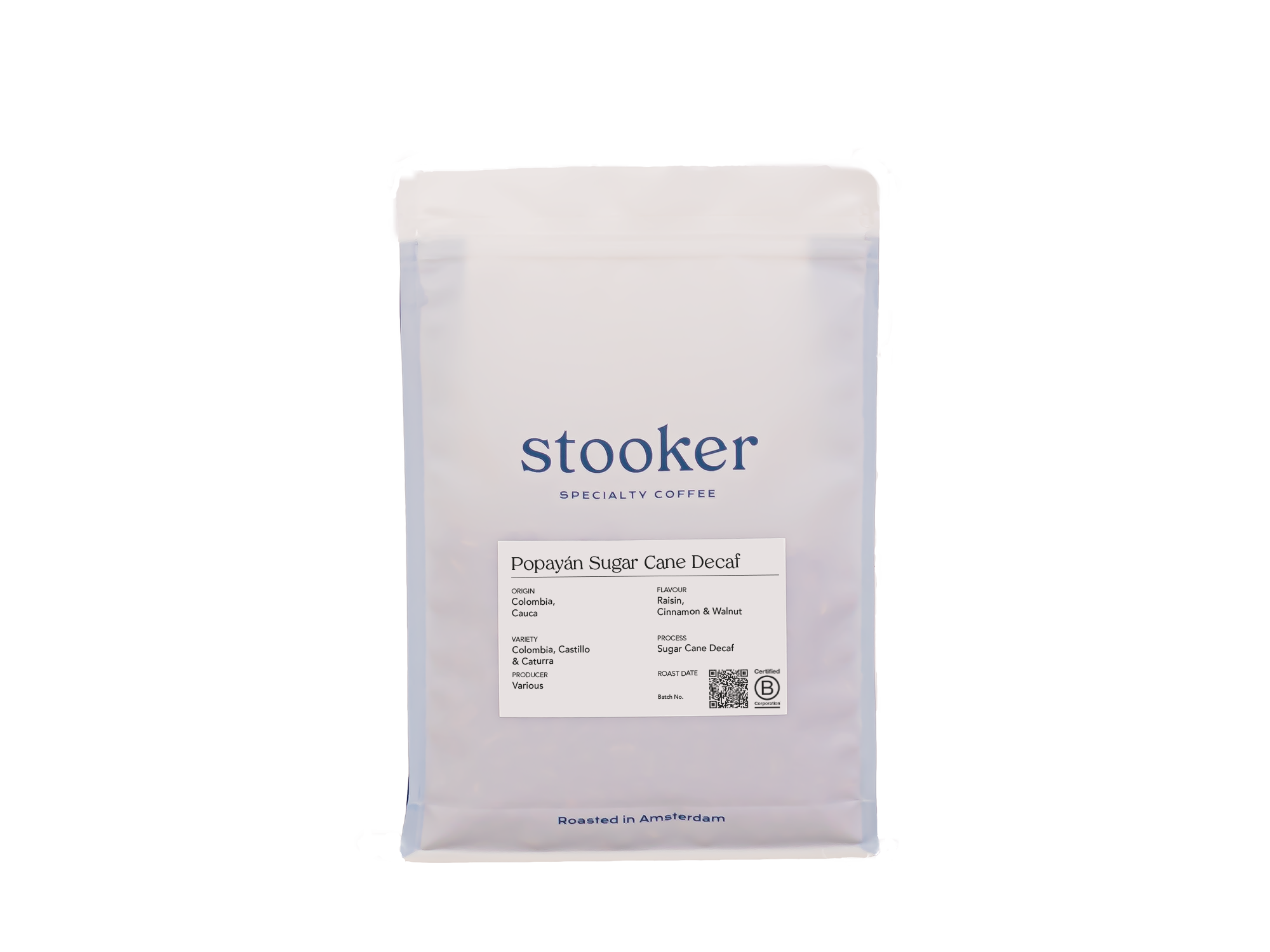

Colombia - Popayán Sugar Cane Decaf
Coffee specs
- Tasting notes
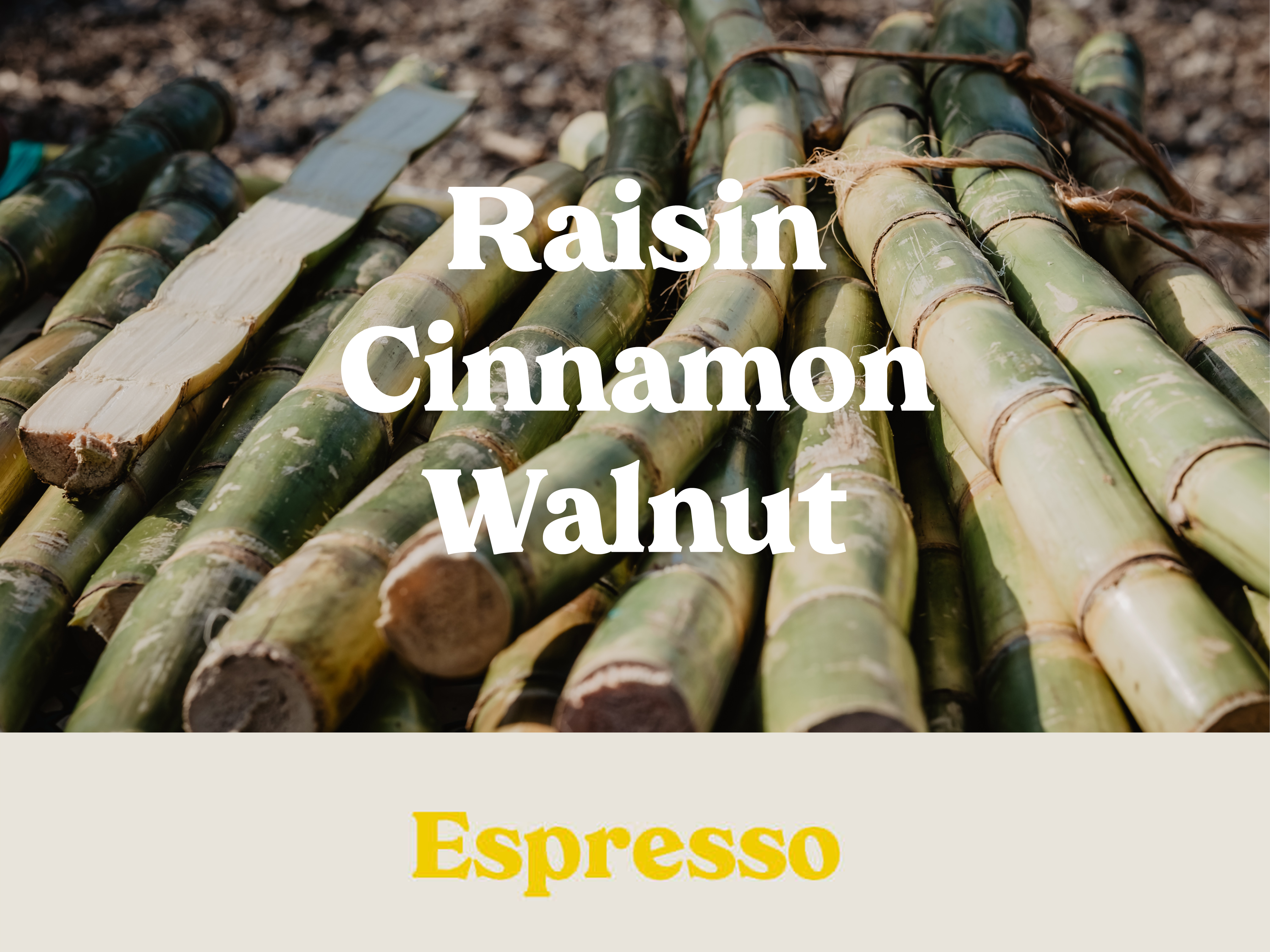
- Raisin, Cinnamon, Walnut
- Origin
- Colombia
- Region
- Popayán (Cauca)
- Variety
- Colombia, Castillo, Caturra
- Process
- Sugar Cane Decaf
- Producer
- Various producers
Most decaf is made from beans nobody was in a hurry to sell, and it tastes that way. We do it differently. Fresh crop from Popayán, in Colombia's Cauca, decaffeinated with ethyl acetate from sugar cane. That Sugar Cane process leaves the sugars and body alone.
What's left is simply a good Colombian (Colombia, Castillo and Caturra varieties) with raisin, cinnamon and walnut in the cup. Roasted dark, so your espresso and cappuccino come out the way they always do. You just won't lie awake afterwards.
Plenty of customers tell us they can't taste the difference from regular coffee. The reviews speak for themselves.
Things people ask us
How much caffeine is left?
A trace. The Sugar Cane process removes about 97%, and no decaf method gets to zero.
How does the sugar cane process work?
Ethyl acetate, derived from sugar cane, binds caffeine and draws it out of the bean. It's gentle, so the sweetness stays.
Why does supermarket decaf often taste stale?
Old beans and harsh processing. Fresh crop and a gentle process make the difference, not the caffeine removal itself.